

Hello, this is Aya, host of Oyado Chiyosato.
Last time, I shared how our family moved to Sakuho, found a magnificent old house through the town’s vacant-house bank, and decided to turn it into an inn.
This time, I’m picking up where that story left off—with the rather chaotic behind-the-scenes tale of how this house became Oyado Chiyosato.
To be completely honest, our original plan was to open at the end of summer.
We actually welcomed our first guests on—New Year’s Eve! (laughs)
So how did that happen? Let me take you through it in order.
The House Search Actually Took Two Years
In my last post, I may have made it sound as though we found the house through the vacant-house bank and decided on it immediately. In reality, we had been looking for nearly two years and viewed more than ten properties.
Some traditional Japanese houses were beautiful but looked as though they would need enormous repairs. Others simply did not feel quite right. For a long time, we could not find the one that made us think, “This is it.”
That is why I will never forget the impact of seeing this house for the first time.
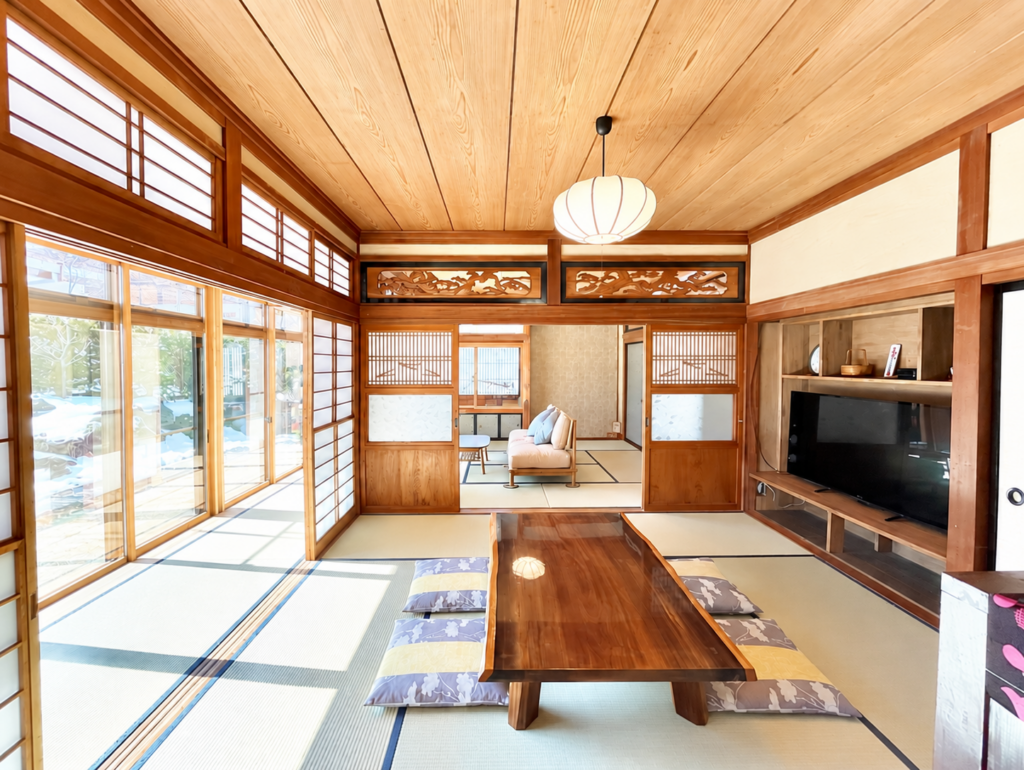
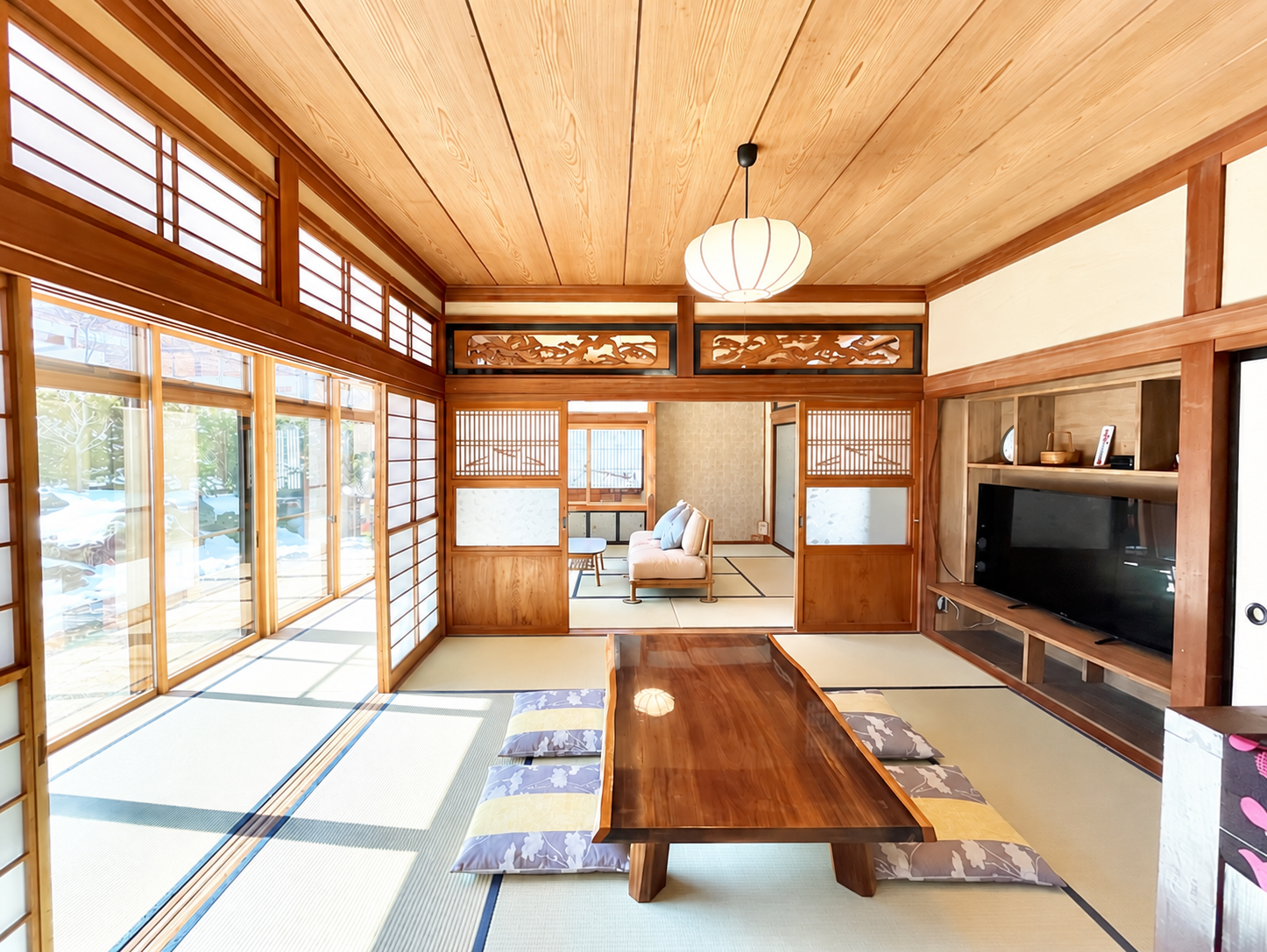
As a traditional Japanese home, its presence was simply perfect.
Because we had already seen so many properties, we could tell with confidence that this house was truly exceptional.
Once We Painted the Dining Room Walls, We Couldn’t Stop
We bought the house in May 2025.
Then the renovation began—and we quickly learned one of the unwritten rules of old houses.
As soon as you make one area beautiful, everything around it starts to bother you.
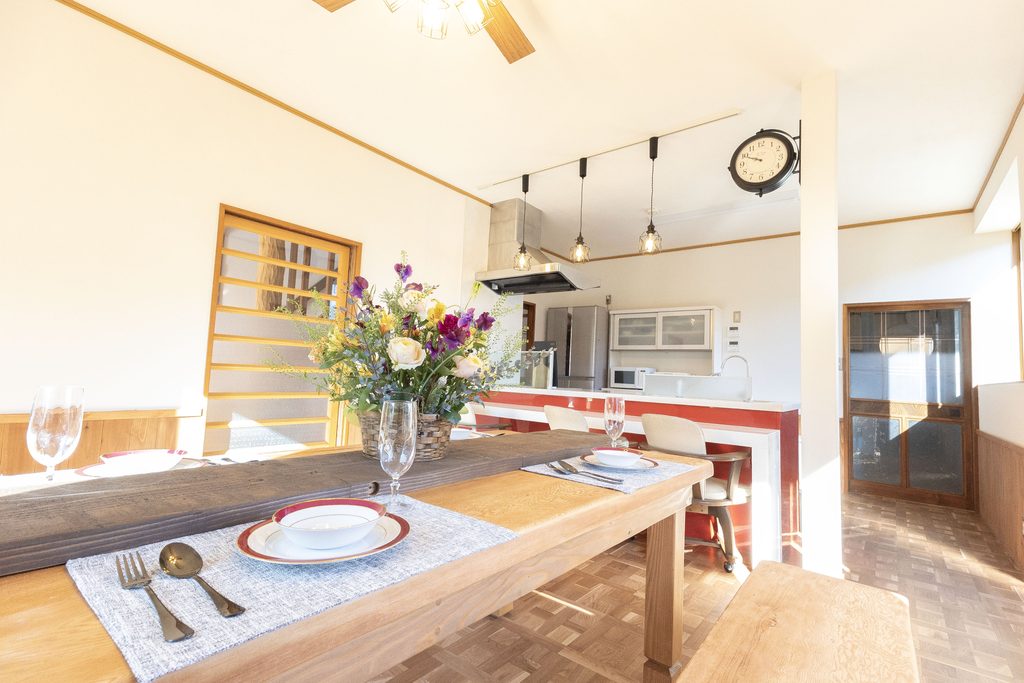
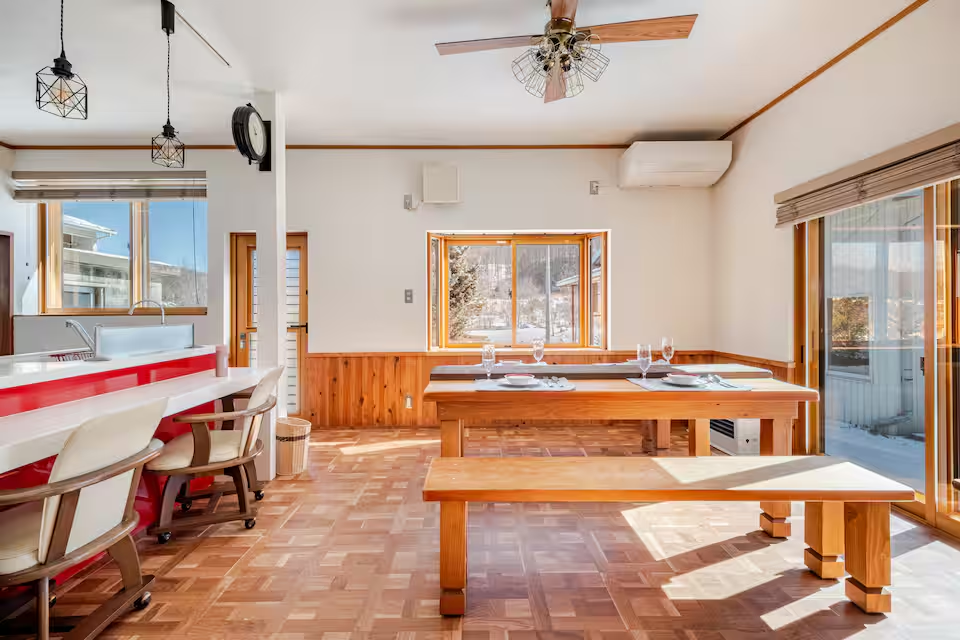
Once we painted the dining room walls, the adjoining hallway suddenly looked tired. So we decided to repaint the hallway too.
Then the ceiling began to stand out, so we replaced the ceiling wallpaper.
We cleared out a storage room behind the kitchen and turned it into a shower room. The changing area beside the bath became a powder room that would be especially comfortable for women—and on it went.
Before we knew it, the scope of the work had grown and grown.
“When Are We Ever Going to Open?”
I cannot count how many times I looked at the calendar and wondered exactly that.
We had hoped to open at the end of summer. But autumn arrived, the mountains changed colour, and then we began hearing news of the season’s first snow.
I was anxious. Honestly, very anxious.


Calling All Wall-Painting Volunteers
What carried us through all that work was the help of other people.
We painted most of the walls ourselves.
Again and again, we called our friends and asked them to join our “wall-painting crew.”
There is something special about a room whose walls you painted together with friends. You become attached to it in a completely different way.
Even now, every time I look at those walls, I remember the faces of everyone who was there.
For the overall interior coordination, we relied on my mother, who loves interior design, and a highly skilled carpenter who could handle the design work as well as the building.
I am not very good at making endless small decisions, so I left the overall consistency to the professionals and my mother. My role was to visit the site and check how everything was coming together.
With interiors, a single mismatched element can change the atmosphere of an entire room, so dividing the work this way turned out to be the right decision.
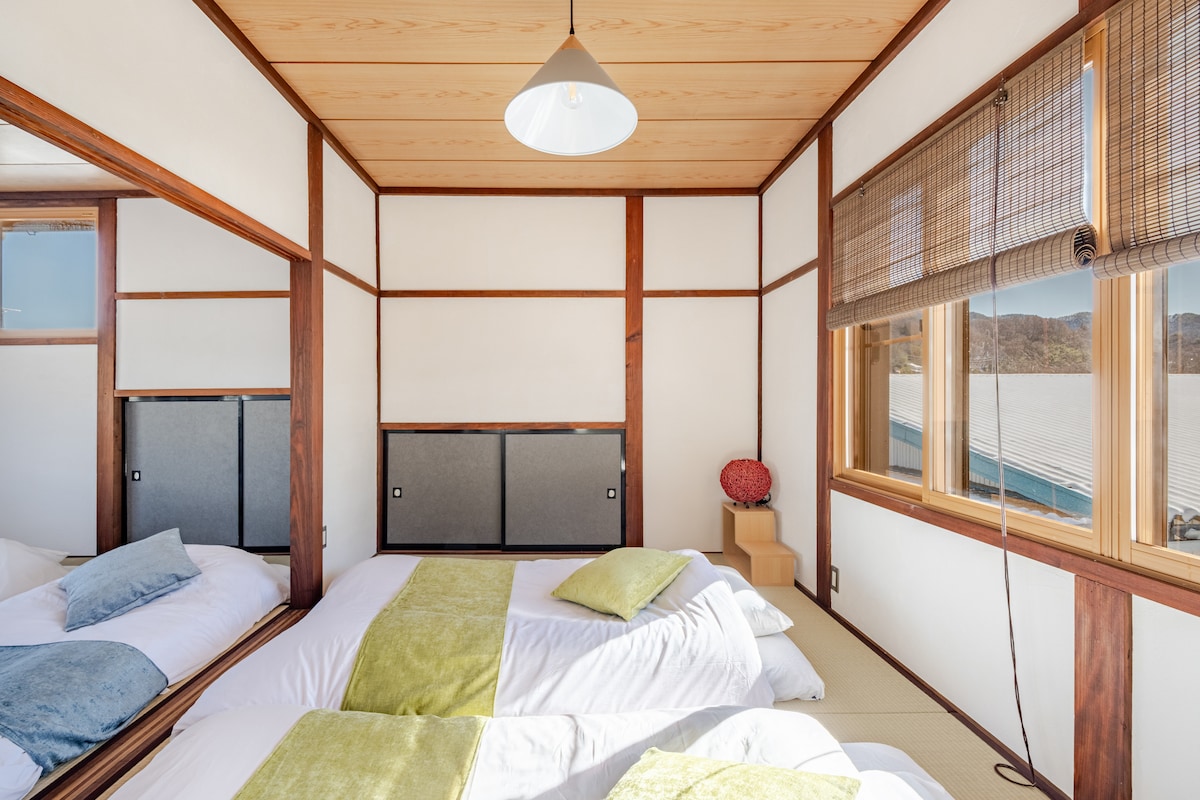
I should also confess one rather charming miscalculation: the raised platform with Ryukyu-style tatami that we built in the upstairs Western-style room.
We made it 40 centimetres high to make lifting and storing the futons easier, but it turned out to be a little high for climbing up and down! (laughs)
It is just the right height for sitting, though, so we have decided to call it a happy accident.
We Became Regulars at the Health Centre and Fire Department
While the building work was underway, we were also dealing with all the official procedures—and there was so much we did not understand.
Opening an inn requires approval from the public health centre, as well as a fire-safety inspection. And nearly all the paperwork was, quite literally, on paper.
The offices were only open on weekdays, which made finding time to visit another challenge.
We went to the health centre, then the fire department, over and over again. We asked the same questions more than once.
Even so, everyone in charge answered us patiently every time. Thanks to them, we were able to move forward with confidence.
I never expected to feel the same warmth from the local offices that we had felt from the people of Sakuho when we first moved here.
During the summer, we tried staying in the house ourselves. At that point, some of the doors had not even been installed yet! (laughs)
And then came a major incident.
Halfway through a bath, the hot water turned cold. That was how we discovered that the boiler had broken down.
We were so relieved to find out before opening! If you are thinking of running an inn, I wholeheartedly recommend doing a trial stay before welcoming guests.
Then, on 11 December 2025, we passed the fire inspection. At that moment, it was finally official: this house could become an inn.
Our First Guests Arrived on New Year’s Eve
We listed the property on a booking site in mid-December, and our first reservation came in soon afterwards.
The stay would begin on 31 December. Our very first guests were coming on New Year’s Eve.
When I saw the booking notification, I was so happy that I jumped for joy. At the same time, I was full of worries.
Would everything we had prepared be enough? Would they be able to relax? Sakuho is cold in winter—would the house be warm enough for them?
At the very least, I wanted our hospitality to come through. I arranged flowers in the dining room and prepared some local sweets.
I was also worried that the house might be difficult to find, so I went outside at their expected arrival time and waited to welcome them in front of the inn.
Our first guests were a family of four from India who were living in Tokyo.
They sometimes visited Karuizawa, but every inn there was full over the New Year holiday. That was how they found our house.
As I welcomed them through the entrance, one of them looked around and asked:
“Is this a shrine?”
They were looking up at the magnificent pillars and traditional details when they said it.
All my tension disappeared at once. I remember thinking, “This house is going to be all right.”
I went to see them off when they left and asked whether they had experienced any inconvenience and how their stay had been.
I will never forget hearing that they had had a wonderful stay.
We had planned to open at the end of summer, and instead it happened on New Year’s Eve. On the final day of the year, this house finally became an inn.
Looking Back
Looking back now, I think those four months of delay were time we needed to make sure we did justice to this house.
In fact, we are still making little improvements here and there.
Perhaps that is simply what life with an old house is like. The work may never truly end.
Next time, I will change perspective a little and write for the organisers of large group trips: what you really need to look for when choosing a place to stay. Until then.
Aya, Host of Oyado Chiyosato